BMW E28 M5
The original super sedan: the M1's engine in a plain three-box body, hand-assembled in small numbers and still the purest expression of the idea.
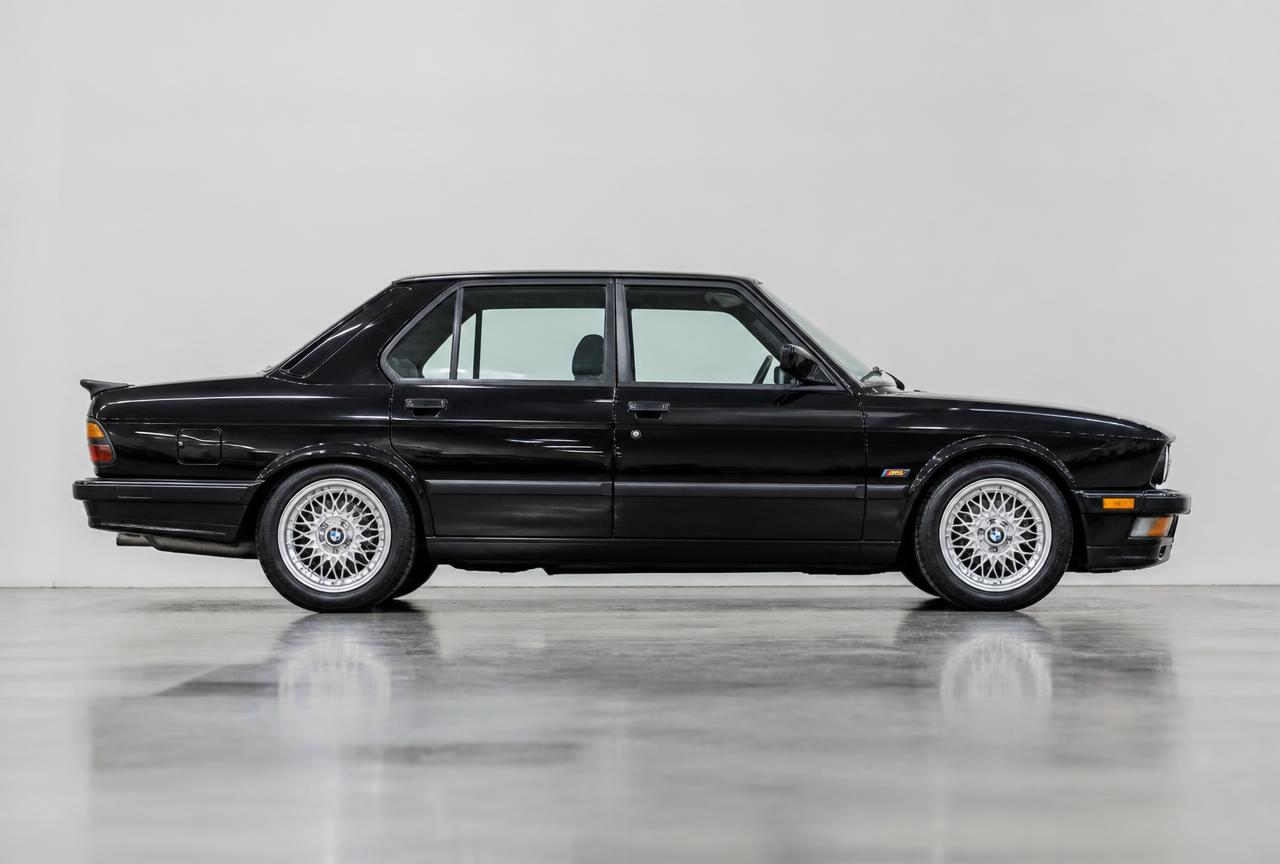
The E28 M5 was the fastest production sedan in the world when it launched, and it looked almost identical to a 528e. That contrast — motorsport hardware in an anonymous shell — created the template every fast sedan since has followed.
The engine is a derivative of the M1's M88 straight-six, with individual throttle bodies and a 6,900 rpm redline. US cars got the catalysed S38B35 with 256 hp and a leather-heavy interior; European cars are more powerful and often more basic.
Every E28 M5 was hand-assembled. Only around 2,200 were built in total, roughly 1,300 of them for North America, which makes it both rare and, by early-M standards, reasonably supported.
Year by year
- 1985–1986 (Europe)
M88/3 with 282 hp. Left- and right-hand drive; specification varies significantly by market.
- 1988 (North America)
Single model year for the US. S38B35 with 256 hp, full leather interior, Shadowline trim and the distinctive front airdam.
- South African cars
Built in Rosslyn with the M88 engine and unique trim; extremely rare and highly collectible.
The good and the bad
Positives
- +Hand-built M1-derived straight-six with individual throttle bodies
- +Genuinely rare — around 2,200 cars worldwide
- +Understated shape that still looks right today
- +Superb long-distance driving position and visibility
- +Simple, mechanical and rebuildable throughout
Negatives
- −Rust in the usual E28 areas is structural and expensive
- −M-specific interior and trim parts are effectively unobtainable
- −Slow by modern standards with heavy unassisted-feeling controls
- −S38 rebuilds are specialist work and cost accordingly
- −Very few cars have complete history
Known faults and what they cost
- Rust: jacking points, wheel arches, sunroof pan, battery tray$3,000–$20,000
Inspect the shell before anything mechanical. Structural corrosion is the deal breaker.
- Timing chain and guides$2,500–$4,500
The S38 uses a duplex chain; guide wear is age-related on all cars.
- Valve adjustment and head wear$500–$900
Shim-over-bucket valve gear needs periodic attention.
- Interior trim and Motorsport-specific parts$500–$5,000 per item
Sport seats, door cards and the M-specific dash are discontinued.
Pre-purchase inspection checklist
- 01Lift it and inspect the floors, jacking points, subframe mounts and inner arches
- 02Verify the S38/M88 engine number matches the documentation
- 03Compression and leak-down test — even numbers across all six
- 04Check the throttle body linkage for smooth synchronised operation
- 05Confirm the M-specific interior and trim is present and correct
- 06Look for a documented service history rather than a claimed one
Modifications for longevity
- Rust prevention
Cavity wax, clear drains, dry storage. The single most valuable thing you can do.
- Timing chain service
Replace chain, guides and tensioner as a set on any engine with unknown history.
- Cooling system overhaul
Radiator, water pump, hoses and thermostat replaced together.
- Valve adjustment
Every 15k miles keeps the S38 head healthy.
- Fuel system refresh
Age-hardened lines and injectors are a fire and driveability risk.
Modifications for performance
- 01Preserve originality
Rarity means original cars are worth materially more.
- 02Suspension and tires
Fresh bushings, correct dampers and modern 16-inch rubber.
- 03Throttle body sync and exhaust
Restores factory sharpness and adds a small honest gain.
- 043.8L S38B38 conversion
The classic upgrade for driver cars — around 340 hp, but it costs originality.
What they are worth
Condition and originality dominate. A rust-free, documented, unmolested car is worth multiples of a tired one, and restoration costs frequently exceed the value of the finished car.
European M88 cars, South African cars and low-mileage US examples occupy the top of the market. Cheap E28 M5s are almost always cars with hidden shell problems.
Owner discussion
0- No comments yet. Be the first.