BMW E60 M5
A Formula 1-inspired V10 revving to 8,250 rpm in a four-door sedan. Spectacular, unrepeatable, and the most maintenance-intensive M car ever sold.
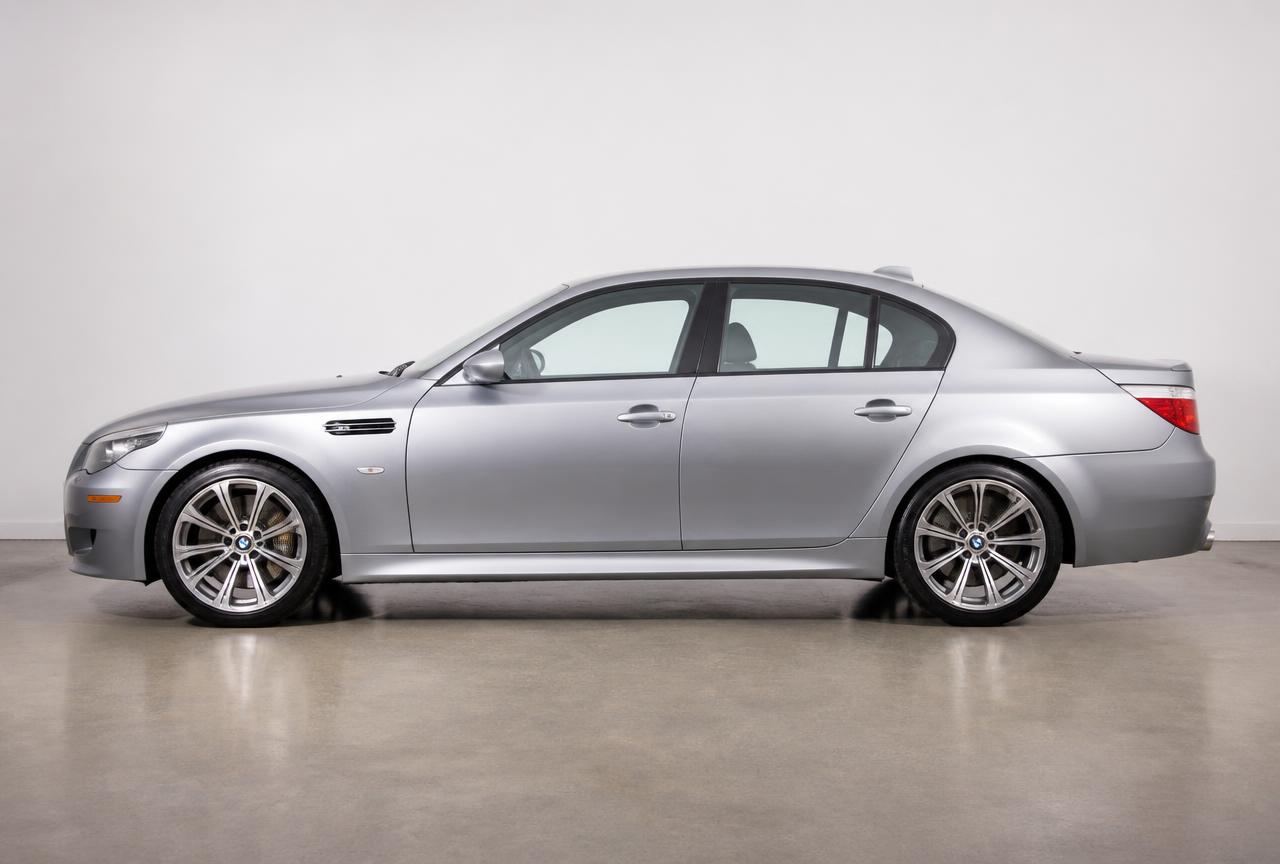
The S85 V10 is the most extreme engine BMW has put in a road car: 500 hp from 5.0 litres naturally aspirated, an 8,250 rpm redline, individual throttle bodies and a sound unlike anything else on the road.
It was paired with the SMG III single-clutch automated manual, which is unloved in traffic and outstanding at speed. North America later received a six-speed manual — around 1,364 cars — which are now the most valuable E60 M5s.
This is a car with a well-documented reliability profile, and the honest advice is simple: buy the one with a documented rod bearing job and a healthy maintenance fund, or do not buy one at all.
Year by year
- 2005–2007
Launch with SMG III only. Early cars are the ones most likely to have had rod bearing and throttle actuator work already.
- 2007–2008
Six-speed manual introduced for North America. Interior and iDrive updates through the run.
- 2009–2010 — final cars
Last of the V10 M5s. E61 Touring (Europe only) produced 2007–2010 in small numbers.
The good and the bad
Positives
- +The only V10 M car ever sold alongside the E63 M6 — a genuine one-off in history
- +8,250 rpm and an F1-derived soundtrack
- +Manual option in North America makes it uniquely desirable
- +Comfortable, roomy and fast enough to embarrass modern cars
- +Values have bottomed and started to rise for good cars
Negatives
- −Rod bearings, throttle actuators and VANOS are all expensive scheduled items
- −SMG III pump failure is common and costly
- −Fuel economy in the low teens at best
- −Enormous consumable costs — tires, brakes, clutch
- −Neglected examples can cost more to repair than they are worth
Known faults and what they cost
- Rod bearing wear$4,000–$7,000
The defining S85 issue; service interval is roughly every 60k miles in practice.
- Throttle actuator failure$2,500–$4,500 for both banks
Ten individual throttles across two actuators; rebuild services are the sane approach.
- SMG III pump and hydraulics$2,000–$4,000
A well-known failure point; many cars have had preventive replacement.
- VANOS solenoids and high-pressure lines$1,500–$3,000
Twin VANOS units and high-pressure hydraulics; leaks are common with age.
Pre-purchase inspection checklist
- 01Insist on rod bearing documentation with mileage and part numbers
- 02Scan for throttle actuator, VANOS and misfire codes across both banks
- 03On SMG cars, check pump operation and clutch wear values via diagnostics
- 04Verify cooling system and oil service history in detail
- 05Confirm the six-speed manual is factory, not a conversion, if claimed
- 06Budget-check: assume $5,000 of deferred maintenance on any undocumented car
Modifications for longevity
- Rod bearings
Every 60k miles or on any car with unknown history. Non-negotiable.
- Oil discipline
5k mile intervals with the correct oil; the S85 is intolerant of long intervals.
- Throttle actuator rebuilds
Preventive rebuild of both banks avoids limp mode and cascading faults.
- SMG pump
Preventive replacement is cheaper than a failure and a tow.
- Cooling system
Full overhaul every 8 years; the V10 generates enormous heat.
Modifications for performance
- 01Maintenance is the modification
A healthy S85 is already extraordinary; a neglected one is a liability.
- 02Exhaust and tune
530–540 hp and a genuinely wild noise from headers and a proper tune.
- 03Individual throttle body sync and cams
Serious naturally aspirated builds toward 570 hp for track use.
- 04Manual conversion
Popular on SMG cars; costly but improves usability and resale for enthusiasts.
What they are worth
Manual cars trade at a substantial premium over SMG. Documented rod bearing history is the strongest single value driver on this chassis.
Touring models (Europe) and low-mileage manual sedans are the collector picks. Cheap cars remain genuinely dangerous purchases.
Owner discussion
0- No comments yet. Be the first.