BMW F10 M5
The turbo V8 M5 that redefined the class: 500 lb-ft, a manual option in North America and a tuning ceiling that reaches 700 hp on stock hardware.
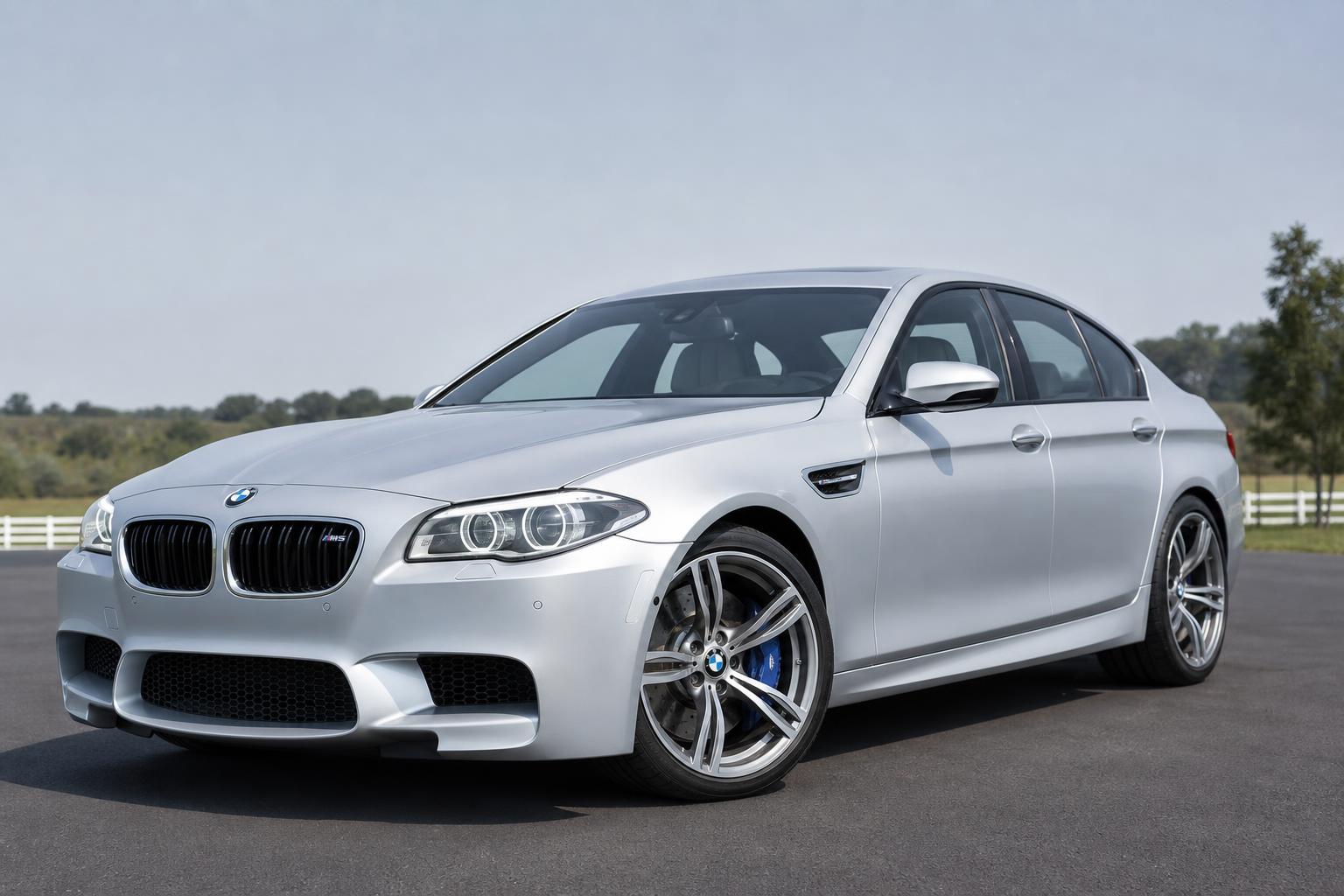
The F10 M5 swapped the V10's theatre for the S63's brutality. Peak torque arrives at 1,500 rpm and the car simply does not stop pulling, which makes it the fastest point-to-point M5 of its era by a wide margin.
North America uniquely received a six-speed manual option, and those cars — a few hundred of them — are already collectible. Most cars use the seven-speed DCT, which suits the engine better in every objective sense.
The S63TU is strong, tunable and reasonably reliable, with a few known items: timing chain guides on early engines, coolant transfer pipe leaks and general heat management under sustained load.
Year by year
- 2012–2013
Launch at 560 hp. Manual option available in North America. Early cars are the ones to check for timing chain and injector history.
- 2014–2015
Competition Package brings 575 hp, revised suspension, retuned steering and a different exhaust note. Facelift lighting from 2014.
- 2016 — final cars
Competition Edition (Europe, 200 cars) with 600 hp. Last year of the F10 M5; best accumulated updates.
The good and the bad
Positives
- +Enormous, effortless torque everywhere in the rev range
- +Manual gearbox available in North America — unique among modern M5s
- +Tunes to 700 hp on stock turbos with excellent driveability
- +Comfortable and quiet when you want it to be
- +Prices are now genuinely accessible for the performance
Negatives
- −Heavy — well over 4,300 lb
- −S63 maintenance is expensive: injectors, chains, cooling
- −Runs hot under sustained track use without upgraded cooling
- −Consumables (tires, brakes, fuel) are supercar-grade
- −Depreciation attracts owners who defer maintenance
Known faults and what they cost
- Timing chain guides (early engines)$4,000–$8,000
Early S63TU units had guide wear; listen for rattle on cold start and check service history.
- Coolant transfer pipe / valley leaks$2,000–$4,000
Labour-heavy V-valley work; look for coolant loss without visible external leaks.
- Fuel injectors$2,000–$3,500 for a set
Index-matched injectors fail with age; rough running and misfires are the symptom.
- Charge cooler and radiator ageing$1,500–$3,000
Heat management degrades over time; critical for any hard-driven car.
Pre-purchase inspection checklist
- 01Cold-start listen for timing chain rattle in the first seconds
- 02Check coolant level history and look for evidence of valley leak repair
- 03Scan for misfire and fuel trim codes suggesting injector wear
- 04On DCT cars, confirm fluid changes and test low-speed engagement
- 05Verify Competition Package equipment via option codes if claimed
- 06Look for tune evidence — flash counters and aftermarket hardware
Modifications for longevity
- Oil every 5,000–7,500 miles
The extended factory interval is too long for a turbo V8 worked hard.
- Cooling system attention
Inspect radiators and the charge cooling circuit; upgrade if tracking.
- Injector replacement
Address as a set when misfires begin rather than one at a time.
- DCT fluid every 40k miles
Cheap insurance against a very expensive mechatronic failure.
- Walnut blasting
Direct injection carbon buildup at 60–80k miles.
Modifications for performance
- 01Tires and brake fluid
The chassis is limited by rubber and heat before it is limited by power.
- 02Stage 1 tune
640–680 hp on stock hardware — one of the biggest single-modification gains in the M world.
- 03Downpipes, intake, cooling
700 hp and much better sustained performance.
- 04Upgraded turbos
800–1,000 hp is achievable; drivetrain, cooling and fuel system upgrades are mandatory.
What they are worth
Manual cars trade far above equivalent DCT examples and are the collector choice. Competition Package cars carry a modest premium over standard.
Prices are low relative to the performance, which means condition and documentation matter enormously. Buy the car with receipts, not the cheap one.
Owner discussion
0- No comments yet. Be the first.