BMW F13 M6
A carbon-roofed grand tourer with 560 hp, available as a coupe, convertible or four-door Gran Coupe — and now one of the great depreciation stories in M history.
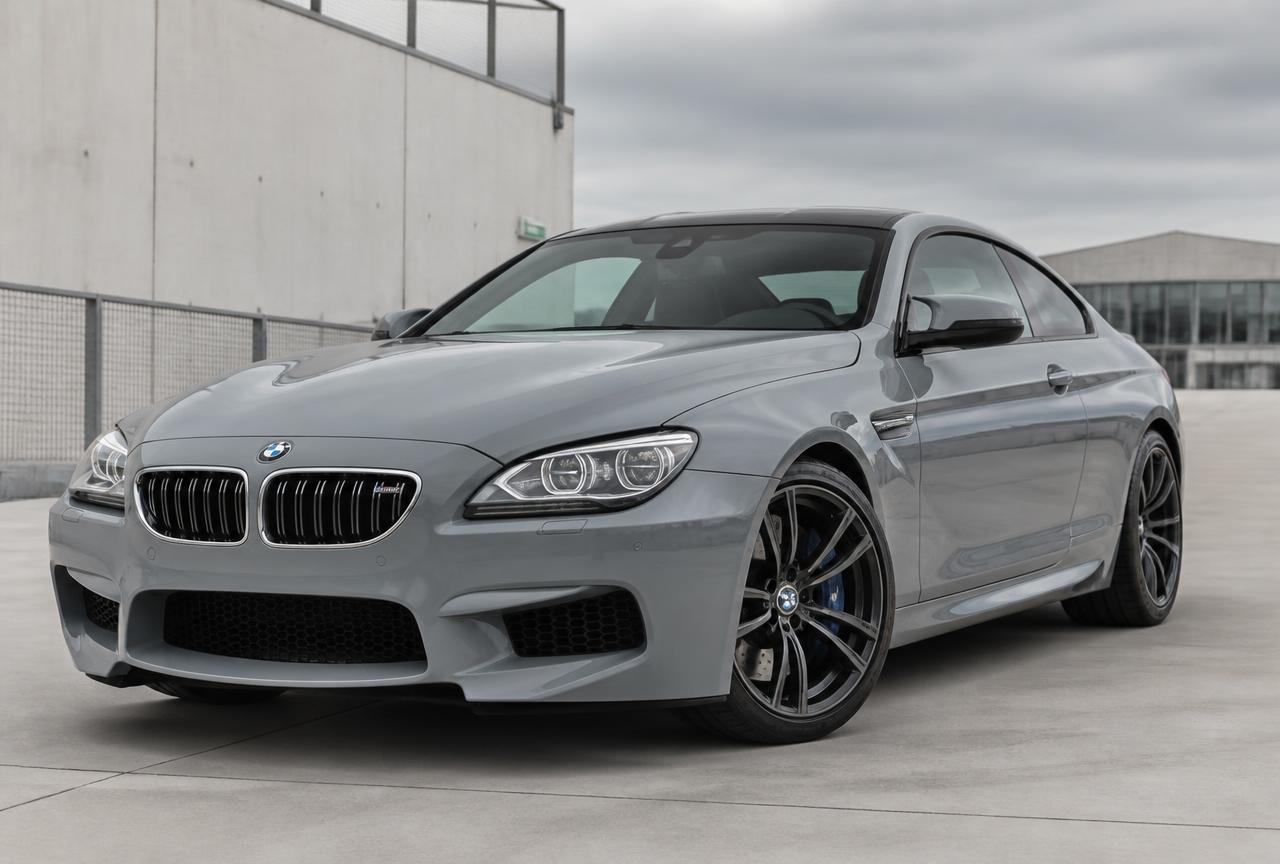
The F13 M6 is the F10 M5's drivetrain in a larger, more luxurious grand touring body. It has a carbon fibre roof, an enormous specification and the same S63 twin-turbo V8 that responds so well to tuning.
The Gran Coupe (F06) is the most usable of the three, combining four doors with the coupe's roofline. The convertible is the heaviest and the softest. All three are fast, comfortable and unexpectedly cheap on the used market.
They depreciated hard, which means the buying opportunity is real and the risk is equally real: these are expensive cars to maintain and cheap cars to buy, a combination that produces neglected examples.
Year by year
- 2013–2014
Launch at 560 hp. Carbon roof standard on coupe and Gran Coupe. Check early cars for timing chain history.
- 2015–2016
Competition Package raises output to 600 hp with revised suspension, steering and exhaust.
- 2017–2018 — final cars
Competition Edition in limited numbers. Last years of the V8 M6 before the model was discontinued.
The good and the bad
Positives
- +560–600 hp with enormous mid-range and a real V8 sound
- +Carbon fibre roof and a genuinely luxurious interior
- +Three body styles including the practical Gran Coupe
- +Huge tuning potential — 700 hp on stock turbos
- +Extraordinary value on the used market
Negatives
- −Heavy and large; it drives like the grand tourer it is
- −S63 maintenance costs are substantial
- −Carbon ceramic brake replacement is astronomically expensive
- −Depreciation attracts deferred maintenance
- −Fuel and tire costs are relentless
Known faults and what they cost
- Timing chain guides (early engines)$4,000–$8,000
Listen for cold-start rattle; verify whether the updated parts were fitted.
- Coolant valley leaks$2,000–$4,000
Labour-heavy repair; check for unexplained coolant loss.
- Fuel injectors$2,000–$3,500
Age-related failures cause misfires; replace as a set.
- Carbon ceramic disc wear$15,000+ per set
If fitted, measure wear carefully — this can exceed the value of the car.
Pre-purchase inspection checklist
- 01Cold-start listen for chain rattle in the first few seconds
- 02Check for coolant loss history and valley repair records
- 03Scan for misfires and fuel trim deviation
- 04Measure carbon ceramic disc wear if fitted
- 05Confirm DCT fluid service history and test low-speed engagement
- 06Verify Competition Package equipment via option codes
Modifications for longevity
- Oil every 5,000–7,500 miles
The factory interval is too long for this engine.
- Cooling system attention
Radiators, charge coolers and the valley circuit.
- DCT fluid at 40k miles
Protects an expensive gearbox.
- Injectors as a set
Piecemeal replacement leads to repeat visits.
- Walnut blasting
Intake valve carbon at 60–80k miles.
Modifications for performance
- 01Tires and brake fluid
The first limits you will find in a 4,300 lb grand tourer.
- 02Stage 1 tune
650–680 hp on stock hardware.
- 03Downpipes and intake
700+ hp with better heat management.
- 04Turbo upgrades
800 hp and beyond with fuel system and drivetrain support.
What they are worth
Among the best performance-per-dollar propositions in the used market. Gran Coupes are the most usable; coupes the most desirable to enthusiasts.
Competition Package cars and low-mileage examples with documented chain and injector work are the ones worth paying up for.
Owner discussion
0- No comments yet. Be the first.