BMW F95 X5 M
The current X5 M: 600+ hp, a far better interior and a chassis that finally makes the concept feel coherent rather than merely fast.
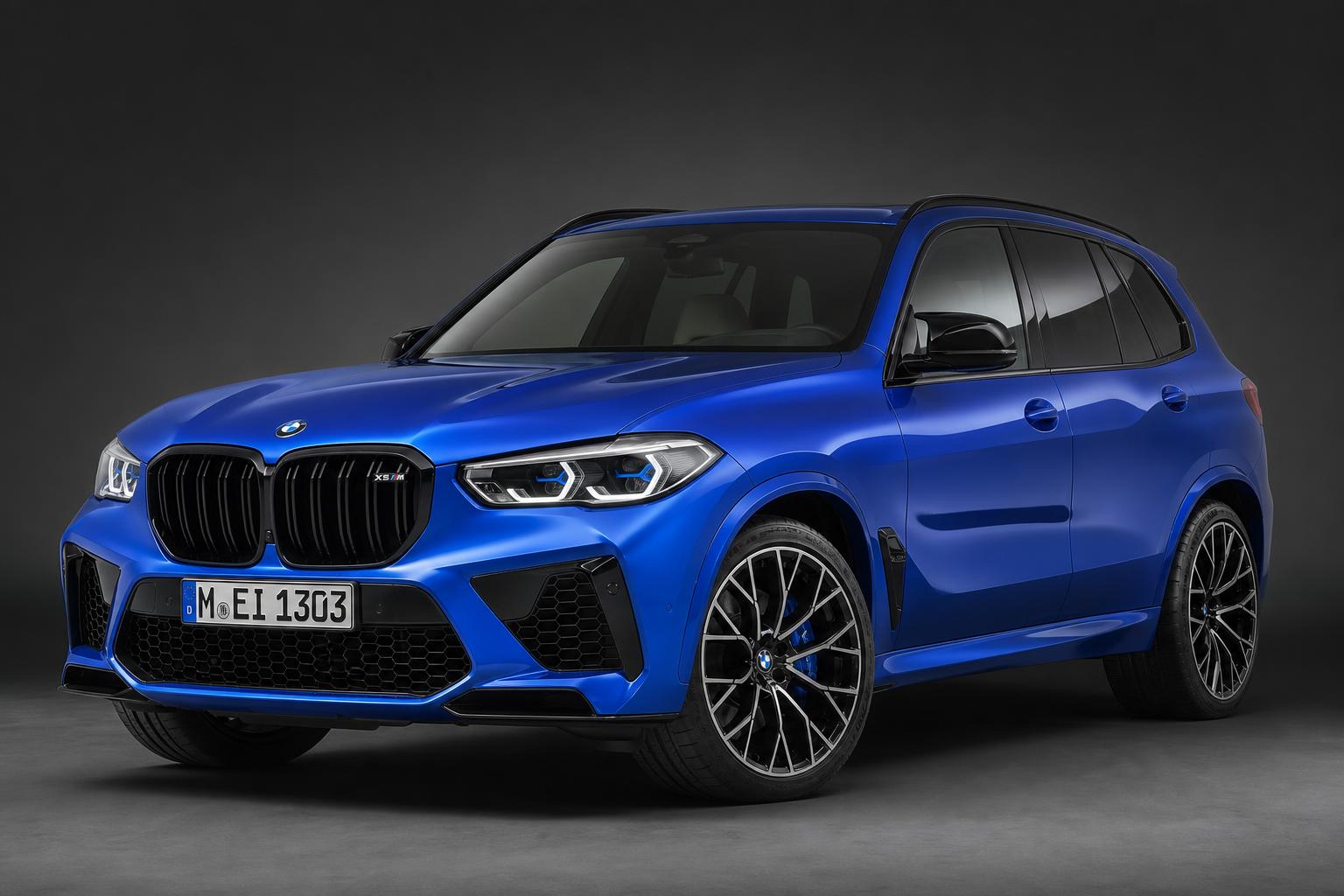
The F95 X5 M is the most complete M SUV yet. The S63 in its latest form produces 600 hp as standard and 617 hp in Competition trim, with a mild-hybrid version arriving later in the run producing 727 hp combined.
More important than the power is the calibration. The suspension, steering and all-wheel-drive tuning finally make the vehicle feel like a coherent performance product rather than a heavy SUV with an M engine bolted in.
Interior quality is a substantial step up, and the eight-speed automatic remains one of the best transmissions available in any performance vehicle.
Year by year
- 2020–2021
Launch at 600 hp with Competition at 617 hp. Standard adaptive M suspension and active roll stabilisation.
- 2022–2023
Equipment updates, expanded M Individual options, revised infotainment.
- 2024–present — LCI
Facelift with mild-hybrid assistance; Competition rated at 727 hp combined and revised styling.
The good and the bad
Positives
- +Genuinely coherent chassis calibration for the first time in an M SUV
- +600–727 hp with total all-weather usability
- +Excellent interior quality and technology
- +Tows, carries and commutes without complaint
- +Enormous tuning headroom on the S63
Negatives
- −Very heavy and physically large
- −Running costs remain substantial
- −Standard brakes wear quickly under hard use
- −Depreciation on heavily optioned cars is steep
- −Hybrid versions add complexity
Known faults and what they cost
- Cooling system under sustained load$1,500–$3,500
Verify condition on any vehicle driven hard or tuned.
- Brake wear$2,500–$5,000 per axle
Heavy vehicle; carbon ceramics cost far more.
- Software and electronic faultsUsually software updates
Keep control modules current; early cars had infotainment bugs.
- Tire wear$2,000–$3,000 per set
Weight and torque are hard on rear tires.
Pre-purchase inspection checklist
- 01Verify all recalls, campaigns and software updates are complete
- 02Ask about tuning history and check for hardware changes
- 03Inspect brake disc and pad life carefully
- 04Check wheels for pothole and kerb damage
- 05Confirm option content via codes rather than the listing
- 06Review service history for oil interval discipline
Modifications for longevity
- Oil every 5,000–7,500 miles
Especially important on tuned vehicles.
- Transmission fluid at 40k miles
Protects the ZF eight-speed under high torque.
- Cooling inspection
Annual check of the full cooling stack.
- Brake fluid every two years
Heat management on a heavy vehicle depends on fresh fluid.
- Walnut blasting
At 60–80k miles.
Modifications for performance
- 01Tires
The single most effective change for grip, braking and steering response.
- 02Stage 1 tune
680–720 hp on stock hardware.
- 03Downpipes and intake
750+ hp with better heat control.
- 04Brake upgrade
Bigger pads and fluid before adding more power.
What they are worth
Steep early depreciation makes three-year-old Competition models excellent value. Look for full BMW service history and modest option loading.
The LCI hybrid is too new to price with confidence; expect the pre-LCI Competition to remain the value pick.
Owner discussion
0- No comments yet. Be the first.