BMW E36 M3
The M3 that made the badge mainstream: usable, light by modern standards, cheap to run and still the enthusiast's favourite chassis for track work.
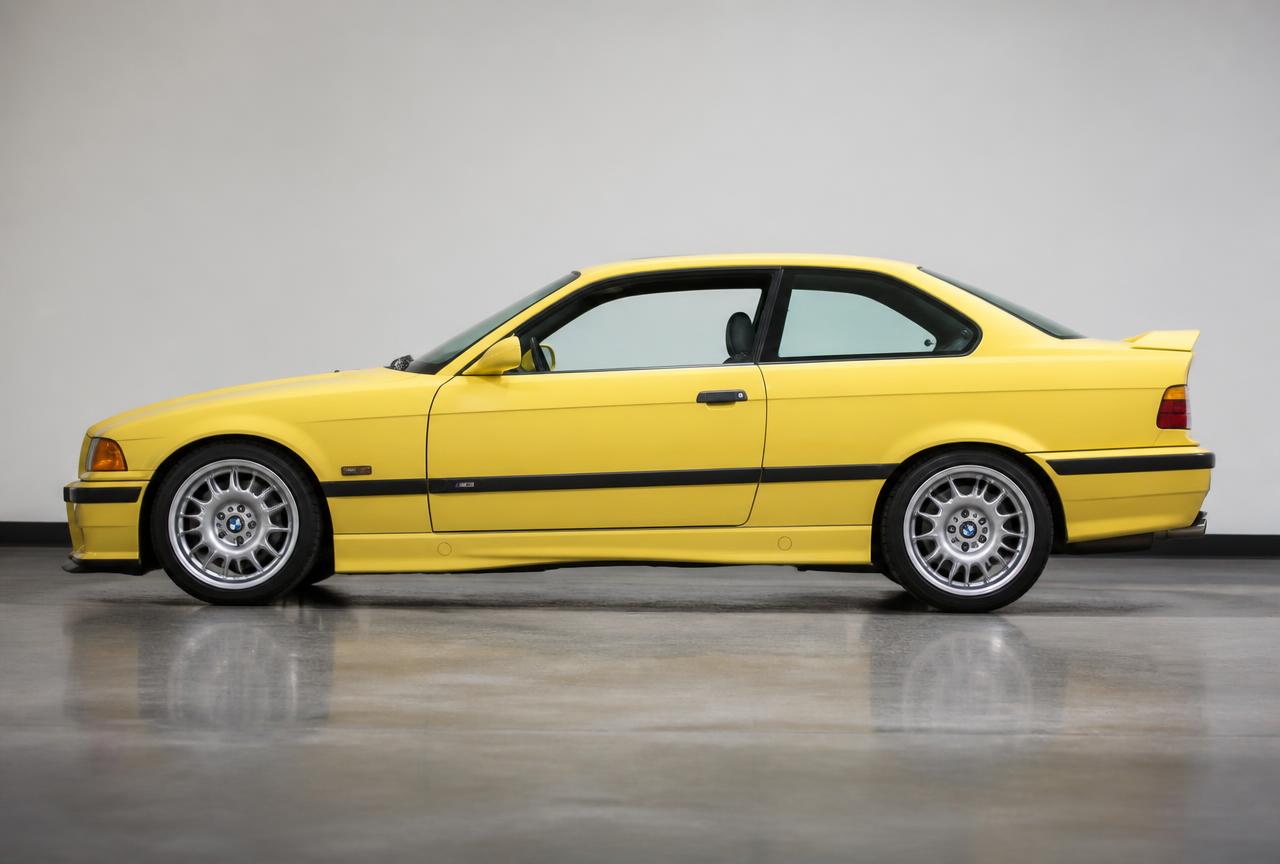
The E36 M3 is the value proposition of the M3 line. North America received a detuned engine — the 3.0L S50B30US and later the 3.2L S52 — which purists spent twenty years complaining about and which owners spent twenty years enjoying, because the chassis was always the point.
It is light, communicative, and simple enough that most jobs are a weekend and a set of hand tools. Parts supply is excellent, aftermarket support is enormous, and the community documentation is deeper than for any other M car.
The catch is age. Every E36 is now old enough that plastics have gone brittle, cooling systems are past their design life, and the subframe area needs a hard look. Buy the maintained one, not the pretty one.
Year by year
- 1992–1995 — S50B30
Euro cars get 286 hp with individual throttle bodies; US cars from 1995 get the 240 hp S50B30US. First US year is coupe only, with the cleanest early interior.
- 1996–1999 — S52 (US) / S50B32 (Europe)
US switches to the 3.2L S52 with 240 hp but more torque; Europe gets the 321 hp S50B32 with double-VANOS and the SMG option. Sedan and convertible added in the US for 1997.
- 1997–1999 specials
US Lightweight (LTW) built in 1995 for homologation; Europe gets the GT and GT2. Late cars have the improved interior trim and better paint durability.
The good and the bad
Positives
- +Best chassis-to-price ratio in the entire M lineup
- +Light, neutral handling with excellent steering feel
- +Enormous parts availability and aftermarket support
- +Straightforward DIY maintenance; no exotic electronics
- +Coupe, sedan and convertible bodies mean it fits real lives
Negatives
- −US engines are noticeably down on the European versions
- −Rear subframe floor cracking is a known and expensive structural issue
- −Cooling system fails comprehensively and takes head gaskets with it
- −Interior plastics, door cards and seat bolsters age badly
- −Many cars have been tracked, drifted or modified without records
Known faults and what they cost
- Rear subframe mounting point cracking$1,500–$3,500
Inspect the trunk floor around the subframe mounts. Reinforcement plates are the standard preventive fix.
- Cooling system failure$800–$1,400 for a full overhaul
Plastic radiator necks, expansion tank, water pump impeller and thermostat all fail with age. Overheating warps the aluminium head.
- VANOS unit wear$600–$1,200
Rattling at idle and lazy mid-range. Rebuild kits are common and effective.
- Rod bearings on hard-driven engines$1,200–$2,000
Not the epidemic it is on the S65, but worth doing preventively on high-mile or tracked cars.
Pre-purchase inspection checklist
- 01Pull the trunk carpet and inspect all four subframe mounting points for cracks or repair welds
- 02Cold-start listen for VANOS rattle and check for smooth idle once warm
- 03Check coolant condition and look for white residue at the expansion tank neck
- 04Test every window, sunroof and door lock — the electrics are a common money pit
- 05Look for roll-cage mounting holes, harness bar residue and evidence of track use
- 06Verify the correct M-specific 3.15 or 3.23 differential and check for whine
Modifications for longevity
- Full cooling overhaul
Radiator, water pump, thermostat, expansion tank, hoses — replace as one job, not piecemeal.
- Subframe reinforcement
Weld-in plates before cracks appear, especially on any car that sees track days.
- VANOS rebuild
Seals and anti-rattle kit restores mid-range response and quiets the top end.
- Rod bearings
Preventive replacement with a fresh oil pump nut check on high-mileage cars.
- Bushings and mounts
Rear trailing arm bushings, control arms and diff mounts transform how the car drives.
Modifications for performance
- 01Tires, alignment, dampers
The chassis rewards good rubber and a proper corner balance more than power.
- 02Intake, headers, tune
Stepped headers, tune and intake take a US S52 to roughly 270 hp with stock reliability.
- 03Supercharger
ESS or Active Autowerke kits deliver 350–400 hp; upgrade the cooling system and clutch first.
- 04S54 swap
The classic upgrade — 333 hp in a lighter shell. Budget for wiring, cooling and a rod bearing job on the donor.
What they are worth
Ordinary automatic convertibles remain the cheapest entry, manual coupes carry a clear premium, and clean unmodified low-mile cars have started to climb sharply. Sedans are the value pick for people who want to drive rather than collect.
US Lightweights, European S50B32 cars and documented one-owner examples trade well above the general market. Modified cars are worth what the buyer thinks of the modifications — typically less than the owner spent.
Owner discussion
0- No comments yet. Be the first.