BMW E46 M3
For many people the high-water mark: hydraulic steering, an 8,000 rpm straight-six, and a shape that has aged better than anything BMW has drawn since.
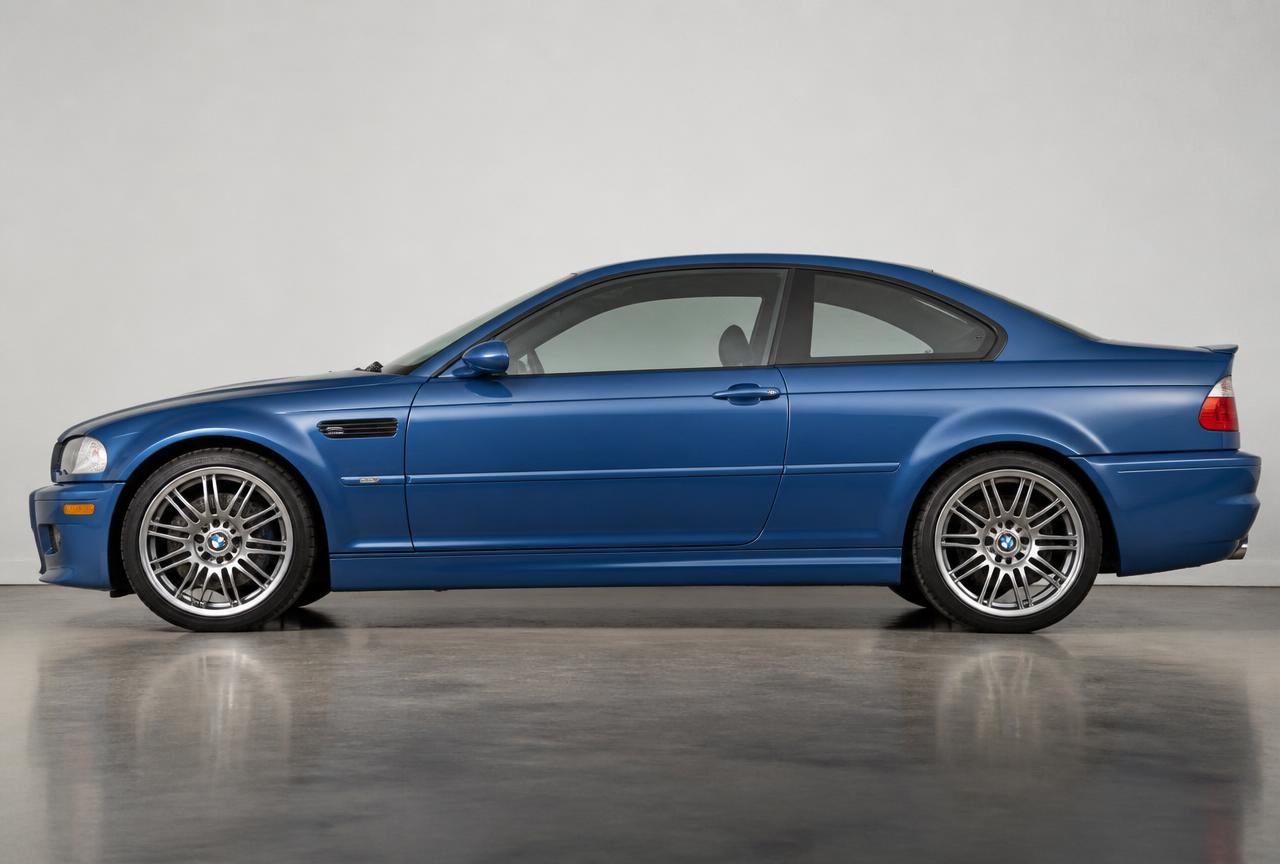
The E46 M3 is the last M3 with hydraulic steering and the last with a naturally aspirated straight-six, and those two facts explain most of its appeal. The S54 pulls hard to an 8,000 rpm redline with a hard-edged intake noise that no turbo M car reproduces.
It is also a genuinely usable car — the seats are comfortable, the trunk is real, and the ride on stock suspension is compliant. That combination of daily usability and analog feedback is why prices have moved from bargain to firm.
It comes with one large caveat: the S54 has documented rod bearing wear, and the buying process is built around whether that job has been done and by whom.
Year by year
- 2001–2002 — early cars
First US model year 2001. Early cars had the original rod bearing spec and the pre-facelift interior. SMG II arrives for 2002 as an option.
- 2003–2004
Facelift lights and interior updates. Competition Package (ZCP) arrives in 2004 with the CSL steering rack, 19-inch wheels, larger cross-drilled brakes and a shorter final drive.
- 2005–2006 — late cars
Best build quality of the run and the revised bearing shell part number. Competition Package continues; the 2006 cars are the most sought after by drivers.
The good and the bad
Positives
- +S54 is one of the great naturally aspirated engines — 8,000 rpm and genuine character
- +Hydraulic steering with real feedback and precision
- +Perfect size: big enough to use, small enough to enjoy
- +Huge specialist and parts support, well-understood by independents
- +Competition Package cars offer a meaningful dynamic upgrade over base
Negatives
- −Rod bearings are a scheduled expense, not a maybe
- −Rear subframe tearing from the floor is common and expensive
- −SMG II is jerky at low speed and its pump is a costly failure point
- −VANOS solenoid and hub bolt issues need attention on every car
- −Prices now assume good history; neglected cars are traps
Known faults and what they cost
- Rod bearing wear$2,000–$3,500 done properly
The defining S54 issue. Ask for the receipt and the part numbers used; oil analysis is a useful supporting check.
- Rear subframe mount tearing$2,500–$5,000
Inspect the trunk floor and the mounting pockets. Reinforcement kits are the accepted fix and add value when documented.
- VANOS: solenoid, hub bolts, high-pressure line$700–$2,000
Rattle, rough idle and lost mid-range. The exhaust hub bolts should be updated to the later spec.
- SMG II hydraulic pump and clutch$1,500–$3,500
A common failure. Manual conversions exist but are labour-heavy; budget accordingly on any SMG car.
Pre-purchase inspection checklist
- 01Confirm rod bearing service with invoices — a claim without paper is not a service
- 02Pull the trunk liner and inspect subframe mounting pockets for cracks and prior welding
- 03Cold start and listen for VANOS rattle; a warm idle should be smooth and steady
- 04On SMG cars, cycle through gears repeatedly and check for slow or clunky engagement
- 05Check for even tire wear and correct alignment — worn rear bushings are common
- 06Verify Competition Package equipment against the option code if the seller claims ZCP
Modifications for longevity
- Rod bearings
Replace at 60–80k miles or on unknown history, with the later bearing shells and a fresh oil pump nut.
- Subframe reinforcement
Weld-in plates before cracks propagate; the cheapest insurance on the car.
- VANOS service
Solenoid, seals and updated exhaust hub bolts as one job.
- Cooling system
Radiator, water pump, thermostat and expansion tank at 80–100k miles.
- Oil and driving discipline
5k intervals, and let the S54 reach full temperature before using the top of the tach.
Modifications for performance
- 01Tires and suspension
A ZCP-spec alignment, quality dampers and modern rubber. The chassis is already excellent.
- 02Intake, exhaust, tune
Headers, a section-one exhaust and a proper tune yield around 360 hp and a much better noise.
- 03Individual throttle bodies and cams
For track cars, CSL-style airbox and cams push past 380 hp with an aggressive delivery.
- 04Supercharger
ESS kits give 450–500 hp; do the rod bearings and cooling first, and expect drivetrain consumables to shorten.
What they are worth
Automatic and SMG convertibles are the entry point, manual coupes are the core market, and Competition Package manual coupes in desirable colours sit at the top of the ordinary range.
Low-mileage, unmodified, single-owner cars with a documented rod bearing job command a substantial premium and are the ones appreciating. Interlagos Blue, Laguna Seca Blue and Phoenix Yellow carry colour premiums.
Owner discussion
0- No comments yet. Be the first.