BMW M1
The only mid-engined M car: a Giugiaro-designed, Lamborghini-assisted supercar built to go racing, and the origin of the M88 engine family.
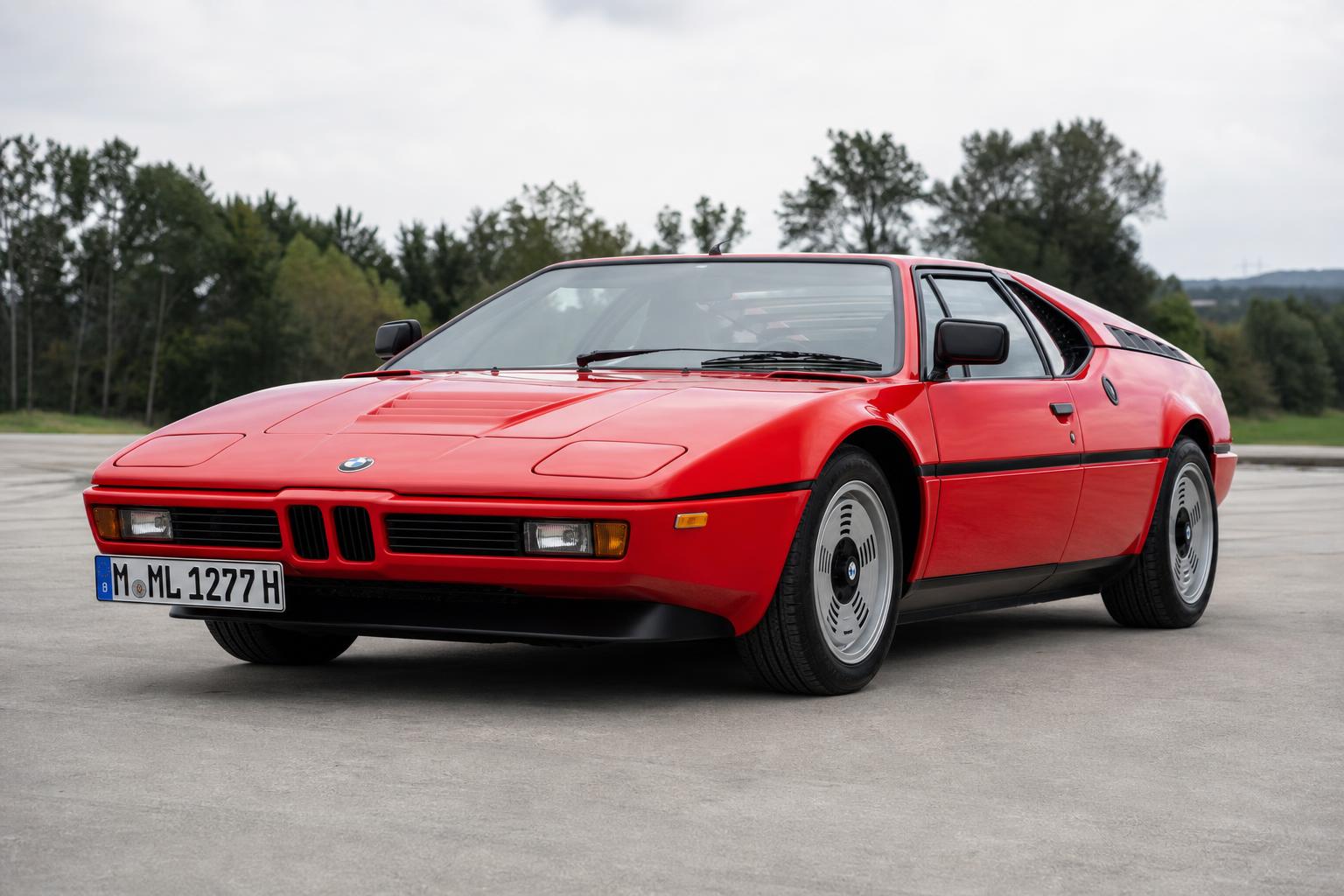
The M1 was BMW's attempt at a Group 5 racing car, developed with Lamborghini until that partnership collapsed and assembly moved to a chain of Italian and German specialists. Only 453 road cars were built.
Its M88 straight-six — twin-cam, 24 valves, individual throttle bodies, dry sump — became the ancestor of the S38 engines that powered the E28 M5 and E24 M6. That lineage is the reason the M1 matters far beyond its production numbers.
Giugiaro's wedge body, the mid-engine layout and the Procar racing series it spawned make it the most historically significant car in this guide, and by a wide margin the most expensive.
Year by year
- 1978–1979 — early cars
Initial production through the Italdesign/Marchesi supply chain. Early cars have subtle trim and interior differences.
- 1980–1981 — later cars
Final production run before the Group 5 rule changes ended the project. Procar racing versions produced separately with around 470 hp.
The good and the bad
Positives
- +The only mid-engined BMW road car ever built
- +M88 engine — the origin of the entire M engine bloodline
- +Giugiaro design that has aged extraordinarily well
- +Genuine motorsport history through the Procar series
- +453 cars: rarity is absolute
Negatives
- −Values are firmly in the seven-figure conversation
- −Body panels are fibreglass and specialist repair only
- −Parts supply is dependent on a handful of specialists
- −Ergonomics and visibility are of their era
- −Any purchase requires expert verification of history
Known faults and what they cost
- Chassis and subframe corrosionSpecialist restoration
The tubular spaceframe is steel under fibreglass; corrosion is expensive and hidden.
- Timing chain and dry sump system$8,000–$20,000
M88 rebuilds are specialist work with limited parts supply.
- Fibreglass panel cracking and repairs$5,000+ per panel
Original panels are scarce; poor repairs are common on used cars.
- Interior and electrical componentsHighly variable
Many parts are model-specific and effectively unobtainable.
Pre-purchase inspection checklist
- 01Engage a recognised M1 specialist before any purchase — this is not a DIY inspection
- 02Verify the chassis number against BMW records and known registries
- 03Inspect the spaceframe thoroughly for corrosion and past repairs
- 04Confirm engine originality and any rebuild documentation
- 05Check the fibreglass bodywork for cracking and repair history
- 06Establish complete ownership and racing history where applicable
Modifications for longevity
- Climate-controlled storage
Humidity is the enemy of the spaceframe and the interior.
- Regular use
Seals, hoses and the dry sump system suffer from long periods of inactivity.
- Specialist servicing
Only use recognised M1 specialists; general classic shops damage value.
- Fuel system maintenance
Modern fuels degrade original components; keep the system fresh.
- Documentation
Maintain a complete, evidence-backed history file — it is a large share of the value.
Modifications for performance
- 01Do not modify
Every modification reduces value on a 453-car production run.
- 02Correct maintenance
A properly set-up M88 with synchronised throttle bodies is transformative.
- 03Period-correct improvements only
Any change should be reversible and documented.
- 04Procar replicas
Built from lesser donors, never from original road cars.
What they are worth
The M1 trades exclusively at auction and through specialist brokers. Provenance, originality and documented history determine results far more than mileage.
Procar-history cars and early production examples occupy the top of the market. Restoration quality and the identity of the restorer matter enormously.
Owner discussion
0- No comments yet. Be the first.