BMW F80 M3
The turbo era arrives: enormous mid-range torque, a carbon driveshaft and a chassis that rewards a confident driver more than a cautious one.
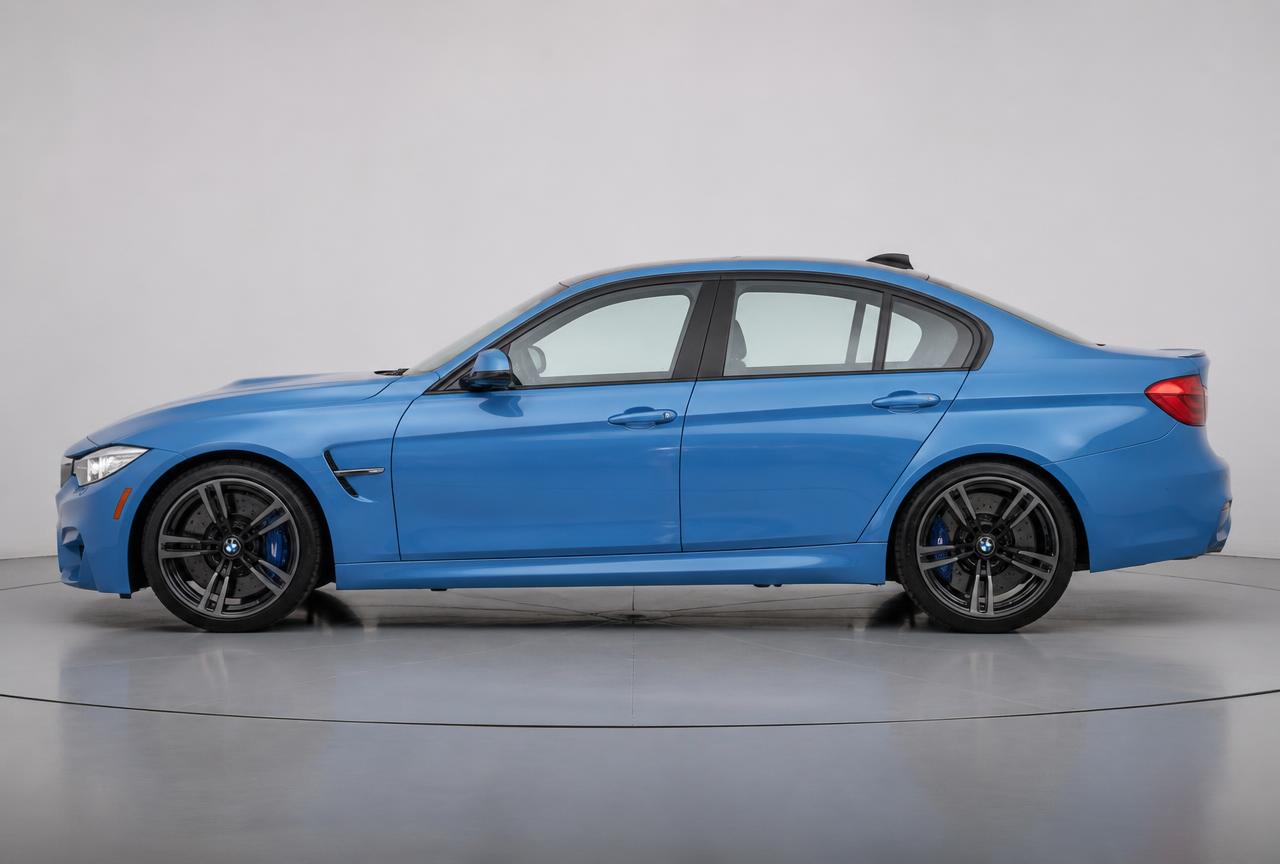
The F80 M3 replaced the S65's shriek with the S55's shove. Peak torque arrives at 1,850 rpm and holds to 5,500 — the car is dramatically faster in the real world than the V8, and dramatically less charismatic at full throttle.
The chassis is stiffer and lighter than the E90 thanks to a carbon fibre driveshaft and roof, and the steering — electric now — is precise if less talkative. Early cars were criticised for a snappy limit; suspension revisions and better tires solved most of it.
The S55 has aged well mechanically. Its main watch item is the crank hub, an issue that only affects a minority of cars but has an outsized reputation because the failure is catastrophic.
Year by year
- 2015–2016
Launch cars at 425 hp. Some early cars had crank hub and rear subframe concerns; check for BMW's inspection and repair records.
- 2016–2017
Competition Package arrives with 444 hp, revised suspension, retuned stability control, sports seats and 20-inch 666M wheels. The Competition is the one to have.
- 2018 — final year
CS model launched with 453 hp, carbon fibre bonnet and Michelin Cup 2 tires. Standard cars get the final refinements and the best interior spec.
The good and the bad
Positives
- +Genuinely fast everywhere — huge usable torque band
- +Carbon driveshaft and roof keep weight down for a turbocharged sedan
- +Competition and CS variants are meaningfully better cars
- +Responds superbly to a tune; 500+ hp with a single map
- +Practical four-door with a usable trunk
Negatives
- −Engine note is synthetic and divides opinion
- −Crank hub slippage is a real if uncommon risk, particularly on tuned cars
- −Early cars can feel snappy at the limit on stock tires
- −Rear subframe cracking was subject to a BMW inspection campaign
- −DCT and diff consumables are expensive when the car is used hard
Known faults and what they cost
- Crank hub slippage$3,500–$6,000 for a pinned hub
Rare on stock cars, more common on tuned ones. Pinning is the accepted preventive fix before serious power increases.
- Rear subframe crackingCovered under BMW campaign for affected VINs
Check whether the inspection and repair was carried out; some cars received a reinforced subframe.
- Charge pipe and boost leaks$300–$700
Plastic charge pipes fail under boost; aluminium replacements are cheap insurance.
- Water pump and cooling components$1,000–$1,600
Electric pump and thermostat are wear items on the S55 as on the S65.
Pre-purchase inspection checklist
- 01Confirm whether the subframe inspection campaign was completed for the VIN
- 02Ask about tune history — flashed and returned-to-stock cars still stressed the crank hub
- 03Look for oil in the charge pipes and check the charge pipe material
- 04Scan for stored fuel trim and boost deviation codes
- 05On DCT cars, verify fluid service and check for clutch judder
- 06Check for Competition Package equipment codes, not just the badge
Modifications for longevity
- Aluminium charge pipe
Cheap, prevents a roadside failure and a limp-mode tow.
- Crank hub pinning
Do it before or with any tune beyond stock power.
- Water pump and thermostat
Preventive replacement around 70–90k miles.
- DCT and differential fluid
40k for DCT, 30k for the diff. Non-negotiable on tracked cars.
- Walnut blasting
Direct injection means intake valve carbon; clean around 60–80k miles.
Modifications for performance
- 01Tires first
Cup 2 or a modern 200-treadwear tire changes the car more than 60 hp does.
- 02Stage 1 tune
500–520 hp on pump gas with stock hardware. The single best value modification.
- 03Downpipes, intake, intercooler
540–570 hp with better heat soak resistance — the practical ceiling for a street car.
- 04Upgraded turbos
600–700 hp territory. Pin the crank hub, upgrade fueling and expect drivetrain consequences.
What they are worth
Competition Package manuals in good colours sit at the top of the standard market; DCT cars are more common and easier to buy well. Tuned cars trade at a discount unless the documentation is complete.
The CS is already a collector car with limited supply. Manual F80s in general are gaining ground as the last manual M3 sedan of their kind.
Owner discussion
0- No comments yet. Be the first.