BMW F82 M4
The coupe half of the S55 story: same engine, lower roof, carbon everywhere and a Competition package that fixed most of the early complaints.
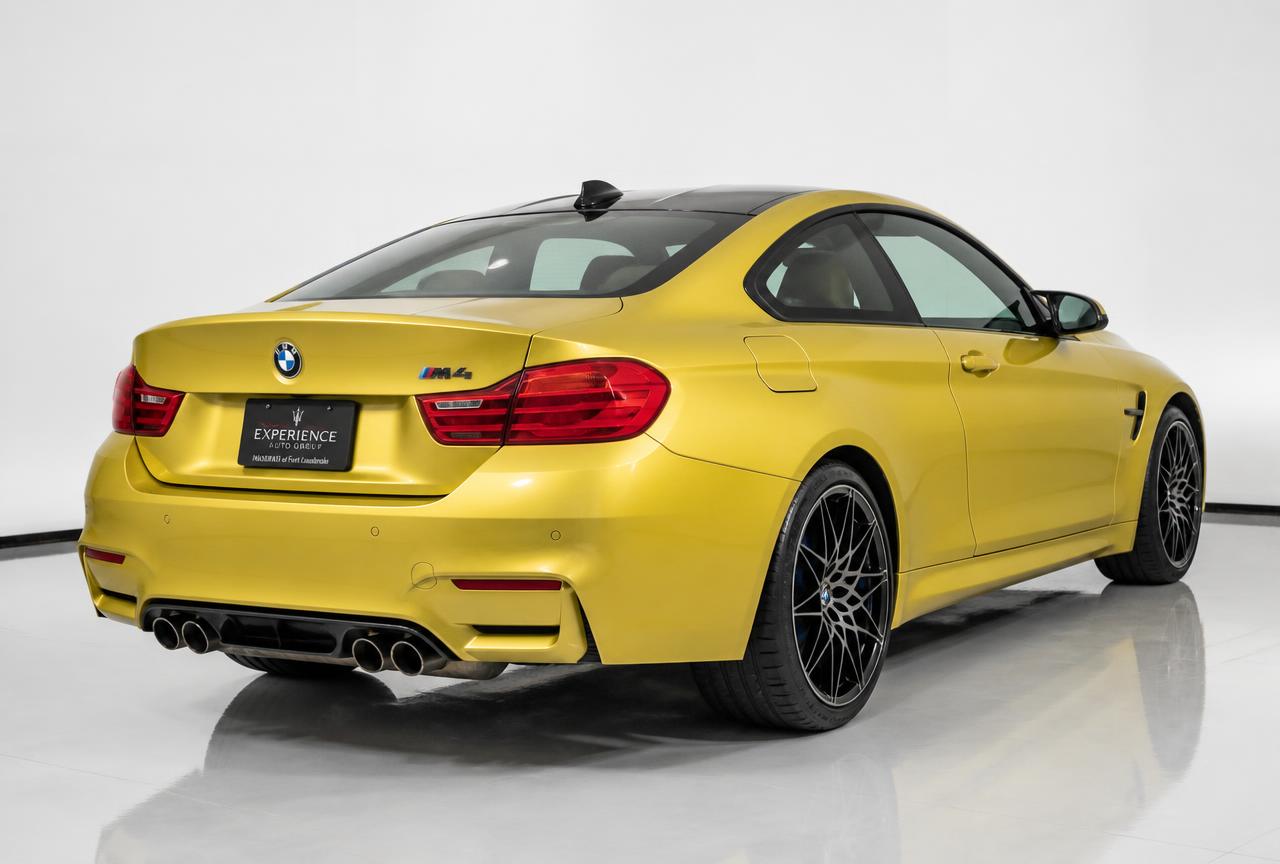
Splitting the M3 and M4 names gave the coupe its own identity, and the F82 wears it well — wider, lower and with a carbon roof standard. Mechanically it is the F80 sedan, which means the same enormous mid-range and the same tuning headroom.
The early cars drew criticism for their ride and their limit behaviour. The 2016 Competition Package addressed both with revised dampers, springs and stability control calibration, and the 2018 CS went further with more power, less weight and Cup 2 tires.
As a used purchase the F82 is compelling: modern safety and infotainment, supercar-adjacent straight-line pace, and a maintenance profile that is manageable if you respect the known items.
Year by year
- 2015–2016
Launch specification at 425 hp. Check for the subframe inspection campaign and early crank hub concerns.
- 2016–2018 Competition
444 hp, revised suspension, lightweight sports seats, 666M wheels and a much better calibrated chassis. The default recommendation.
- 2018–2020 CS and final cars
CS with 453 hp, carbon bonnet, stripped door cards and Cup 2 tires. GTS (2016) sits above with water injection and 493 hp in a 700-car run.
The good and the bad
Positives
- +Enormous real-world speed with an easy 500+ hp tuning path
- +Carbon roof and driveshaft as standard equipment
- +Competition and CS versions are properly sorted cars
- +Excellent brakes, especially with the carbon-ceramic option
- +Still modern enough to be a daily driver without compromise
Negatives
- −S55 sound is synthetic and lacks the drama of the S65
- −Crank hub risk on tuned cars
- −Early cars ride harshly and can feel nervous on cold tires
- −Convertible (F83) adds significant weight and loses the carbon roof
- −Carbon-ceramic brake replacement costs are eye-watering
Known faults and what they cost
- Crank hub slippage$3,500–$6,000
Preventive pinning is standard practice before meaningful power increases.
- Rear subframe crackingCampaign repair for affected VINs
Verify the inspection was completed and documented.
- Charge pipe failure$300–$700
Replace the plastic pipe with aluminium as routine preventive work.
- Oil filter housing gasket and cooling components$600–$1,600
Common ageing items; look for oil residue around the housing.
Pre-purchase inspection checklist
- 01Check the VIN against the subframe inspection campaign
- 02Ask directly about tuning history and look for flash counter evidence
- 03Inspect for oil in the intercooler piping and around the filter housing
- 04Test DCT low-speed behaviour and confirm fluid service history
- 05On carbon-ceramic cars, measure disc wear — replacement is enormously expensive
- 06Confirm Competition or CS equipment via option codes
Modifications for longevity
- Aluminium charge pipe
First modification anyone should make; prevents a common failure.
- Crank hub pinning
Prerequisite for any tune above stock power.
- Cooling system
Water pump, thermostat and expansion tank around 70–90k miles.
- Walnut blasting
Carbon cleaning at 60–80k miles restores throttle response.
- Fluid discipline
DCT every 40k, differential every 30k, engine oil every 7.5k or annually.
Modifications for performance
- 01Tires and brake fluid
Cup 2 tires and high-temp fluid before any power work.
- 02Stage 1 tune
500–520 hp on stock hardware; transforms the car's mid-range.
- 03Downpipes and intercooler
540–570 hp with far better sustained-load behaviour on track.
- 04Big turbos and fueling
600–700+ hp. Pinned hub, upgraded clutch pack and a real cooling plan required.
What they are worth
Competition coupes in manual with desirable colours lead the mainstream market; convertibles are the cheapest way in and the least sought after. Documented, unmodified cars are increasingly hard to find.
The GTS and CS trade in their own tier and hold value strongly. Yas Marina Blue and Austin Yellow carry recognisable colour premiums.
Owner discussion
0- No comments yet. Be the first.