BMW G80 M3
Divisive grille, undeniable capability: the S58 is the strongest M engine ever offered in an M3, and xDrive made it genuinely all-weather.
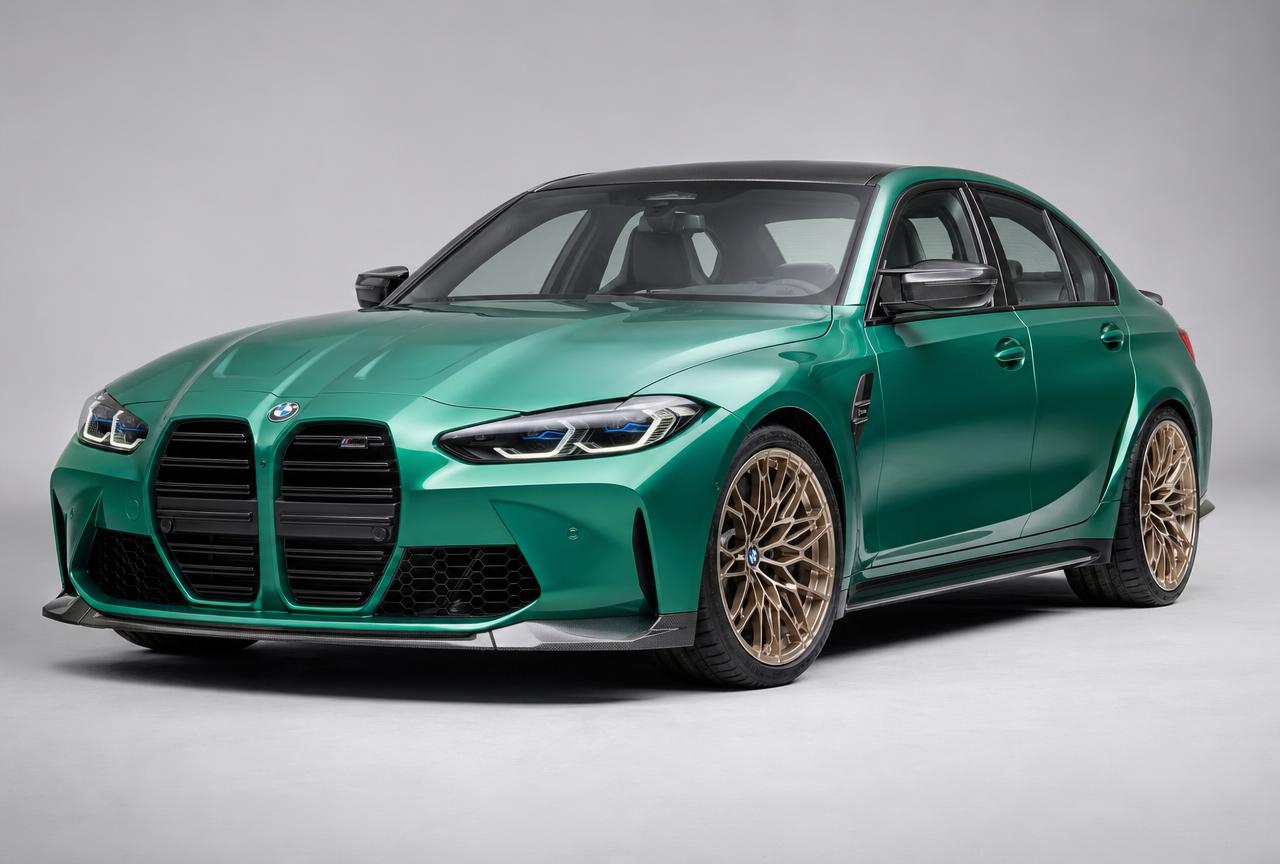
Whatever you think of the front end, the G80 is the most complete M3 BMW has built. The S58 uses a closed-deck block, a forged crank and improved cooling — the crank hub weakness of the S55 is gone, and the engine has proven capable of very large power on stock internals.
The chassis carries more mass than the F80 but hides it well, and the optional xDrive system transformed the M3's usable-year calendar. Rear-wheel-drive purists still have the standard car and the manual gearbox, which remains available on the base model.
It is also the most configurable M3 ever, with separate settings for engine, steering, damping, brakes and traction. Getting the setup right is part of ownership.
Year by year
- 2021
Launch: base 473 hp with a 6-speed manual, Competition 503 hp with 8-speed automatic, rear-wheel drive only.
- 2022
Competition xDrive arrives with a rear-biased all-wheel-drive system and a 2WD mode. The M3 Touring launches in Europe.
- 2023–present
CS arrives with 543 hp, carbon bucket seats, titanium exhaust and a 75 lb weight reduction. LCI updates bring revised lighting and interior software.
The good and the bad
Positives
- +S58 is exceptionally strong and tunes to enormous power reliably
- +xDrive makes it genuinely usable year-round
- +Manual gearbox still offered on the base car
- +Adjustable brake feel, damping and traction with 10-stage M Traction Control
- +Touring body (Europe) is the practical enthusiast's dream
Negatives
- −Polarising front-end styling
- −Heavy — nearly 3,900 lb before options
- −Interior tech-forward at the expense of tactile controls
- −Carbon bucket seats are uncomfortable for some and expensive
- −Depreciation on heavily optioned cars can be steep
Known faults and what they cost
- Early-build cooling and charge air issuesWarranty on most cars
Some early cars had cooling and sensor recalls; verify service campaigns were completed.
- Carbon bucket seat cracking$2,000+ per seat
Reported on early cars; inspect the carbon shells closely.
- iDrive software glitchesUsually a software update
Early infotainment builds had bugs; ensure the latest version is installed.
- Brake squeal and disc wear on M Compound brakes$1,500–$3,000 per axle
Normal wear item; carbon ceramics cost far more.
Pre-purchase inspection checklist
- 01Verify all service campaigns and software updates were performed
- 02Ask about tune history — the S58 is heavily tuned and easy to flash
- 03Check carbon bucket seat shells for cracking if fitted
- 04Confirm whether xDrive, carbon ceramics and Track Package are actually present via option codes
- 05Inspect wheels for kerb damage — the 19/20 staggered setup is vulnerable
- 06Look for track use: brake disc condition, tire wear pattern, harness bar residue
Modifications for longevity
- Oil intervals
Ignore the long service indicator; change oil every 7,500 miles or annually.
- Cooling checks
Inspect the cooling stack and radiators annually, especially on tracked cars.
- Differential and transmission fluid
Every 30–40k miles on hard-used cars, regardless of 'lifetime' claims.
- Carbon cleaning
Walnut blast the intake valves around 60–80k miles.
- Software currency
Keep iDrive and control module software updated at service visits.
Modifications for performance
- 01Tires and setup
Dial in damping, traction and steering settings; fit a modern 200-treadwear tire for track work.
- 02Stage 1 tune
560–600 hp on pump gas with no hardware changes.
- 03Downpipes, intake, intercooler
620–680 hp with far better heat management.
- 04Upgraded turbos and fueling
700–900+ hp is achievable on stock internals with e85 and supporting mods.
What they are worth
Competition xDrive dominates the used market; manual rear-wheel-drive cars are scarcer and increasingly sought after by enthusiasts who want the last manual M3.
The CS and Touring occupy the collector end. Heavily optioned Competition cars depreciate hardest, which makes a two-to-three-year-old example the value play.
Owner discussion
0- No comments yet. Be the first.